
Who were the First-Class Passengers of the Titanic? The RMS Titanic was a huge ship that set sail from Southampton to New York City on 10 April 1912. It was like a floating palace with grand staircases, fancy dining rooms, and a swimming pool. The Titanic was not just a ship but a symbol of human ingenuity and the promise of a new era of travel.
Luxury Afloat: The First-Class Passengers of the Titanic

AD We have been or could be if you click on a link in this post compensated via a cash payment, gift or something else of value for writing this post. See our full disclosure policy and privacy policy for more details.
But who were the First class passengers onboard that Fateful Night on 15th April 1912? The first-class roster read like a who’s who of early 20th-century high society. Let’s take a closer look at some of the notable figures on the Titanic.
The Titanic’s journey was tragically cut short. On the night of 15 April 1912, the ship hit an iceberg and began sinking into the icy waters of the North Atlantic. Amidst the chaos, the first-class passengers had to find a spot on the limited lifeboats quickly. This article explores the experiences of these first-class survivors, their stories of survival, and the legacy they left behind.
The First-Class Experience: Luxuries and Amenities

First class on the Titanic was like staying in a five-star hotel. Passengers enjoyed lavish suites, gourmet meals, and access to exclusive areas like the smoking room and the grand staircase. The first-class cabins were designed to provide the utmost comfort, featuring private bathrooms, luxurious furnishings, and even personal stewards to attend to every need.
John Jacob Astor IV and Madeleine Astor

John Jacob Astor IV, one of the wealthiest men on the ship, was travelling with his young and pregnant wife, Madeleine. Their story is one of love, loss, and survival. John Jacob Astor IV was a prominent real estate developer and investor known for his wealth and influence. Astor is credited with building several iconic hotels in New York City. His most famous project was the St. Regis Hotel, which opened in 1904. The hotel quickly became a symbol of luxury and opulence, catering to New York’s elite.
In 1911, at 47, Astor married Madeleine Talmage Force, who was 29 years younger. The marriage sparked a scandal, as he had recently divorced his first wife, Ava Lowle Willing. The media criticized both the large age difference and the swift remarriage. Madeleine was pregnant when they boarded the Titanic, and she survived the sinking.
Benjamin Guggenheim

Industrialist Benjamin Guggenheim was another prominent figure. Guggenheim helped escort Aubart and her maid to a lifeboat, ensuring their safety. He then reportedly refused to take a seat on any of the lifeboats himself, believing it was his duty to give others a chance to survive. According to witnesses, Guggenheim remained calm and accepted his fate with dignity. He was last seen sitting in the grand staircase area with his valet (Victor Giglio) both dressed in evening wear as the ship sank.
He famously changed into his evening wear, declaring, “We are dressed in our best and are prepared to go down like gentlemen.” Guggenheim’s actions during the sinking showed the bravery that many first-class passengers displayed.
Isidor and Ida Straus

Isidor Straus, co-owner of Macy’s department store, and his wife, Ida, chose to stay together on the ship, embodying the phrase “till death do us part.” Their love story is one of the most touching tales from the Titanic disaster. Despite being offered a place on a lifeboat, Ida refused to leave her husband’s side, and the couple perished together in each others arms.
Notable First-Class Survivors: The Unsinkable Molly Brown
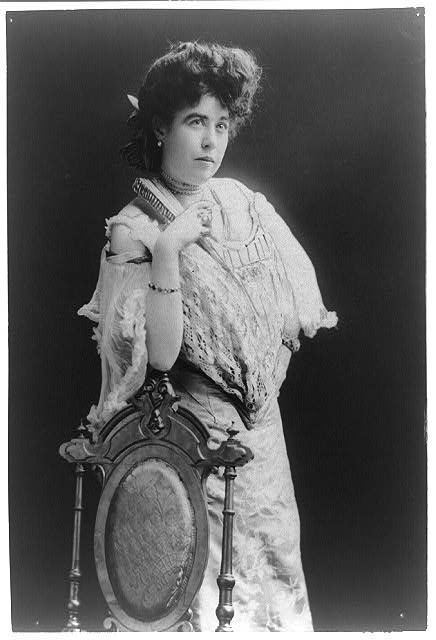
A socialite and philanthropist, Molly Brown earned the nickname “The Unsinkable Molly Brown” for her heroic efforts during the disaster. She helped row Lifeboat 6 and encouraged others to return to look for survivors. Molly’s bravery and leadership during the crisis made her a symbol of courage and resilience. Her story has been immortalised in books, movies, and musicals, ensuring that her legacy lives on.
Madeleine Astor: A Tale of Survival and Loss

Madeleine Astor, the young and pregnant wife of John Jacob Astor IV, survived the disaster by boarding Lifeboat 4. Her story is one of resilience and heartbreak, as she lost her husband in the tragedy. After the sinking, Madeleine faced a challenging future as a young widow and mother. Despite the immense loss, she went on to live a full life, raising her son and eventually remarrying.
Cosmo and Lucy Duff-Gordon: Controversy and Survival

Cosmo and Lucy Duff-Gordon survived by boarding Lifeboat 1, which controversially left the ship with only 12 people despite having a capacity for 40. Their story sparked debates and investigations in the aftermath. The Duff-Gordons faced criticism for their actions, with some accusing them of bribing the crew to row away from the sinking ship. Despite the controversy, they both survived and continued their lives, albeit under a cloud of suspicion.
Lucy Duff-Gordon survived by boarding Lifeboat 1

Lucy Duff-Gordon who survived by boarding Lifeboat 1. Lucy Christiana Duff-Gordon (1863–1935) was a pioneering British fashion designer, best known for her haute couture fashion brand “Lucile”. She was one of the most successful designers of the early 20th century and was credited with creating designs that were both elegant and liberating for women at the time. She dressed royalty and celebrities, and her fashion house had branches in London, New York, and Paris.
Archibald Willingham, Major Butt

Archibald Willingham Butt, often known as Major Archibald Butt, was a distinguished American military officer, journalist, and close aide to two U.S. presidents, William Howard Taft and Theodore Roosevelt. He became a significant figure in American society due to his military service and his connections in Washington, D.C., but his most enduring legacy is tied to his heroic actions during the Titanic disaster of which he travelled alone.
Like many of the Titanic’s passengers, Major Archibald Butt perished when the ship sank in the early hours of April 15, 1912. His body was never recovered.
Dorothy Gibson: Titanic, a survivor in Lifeboat 7
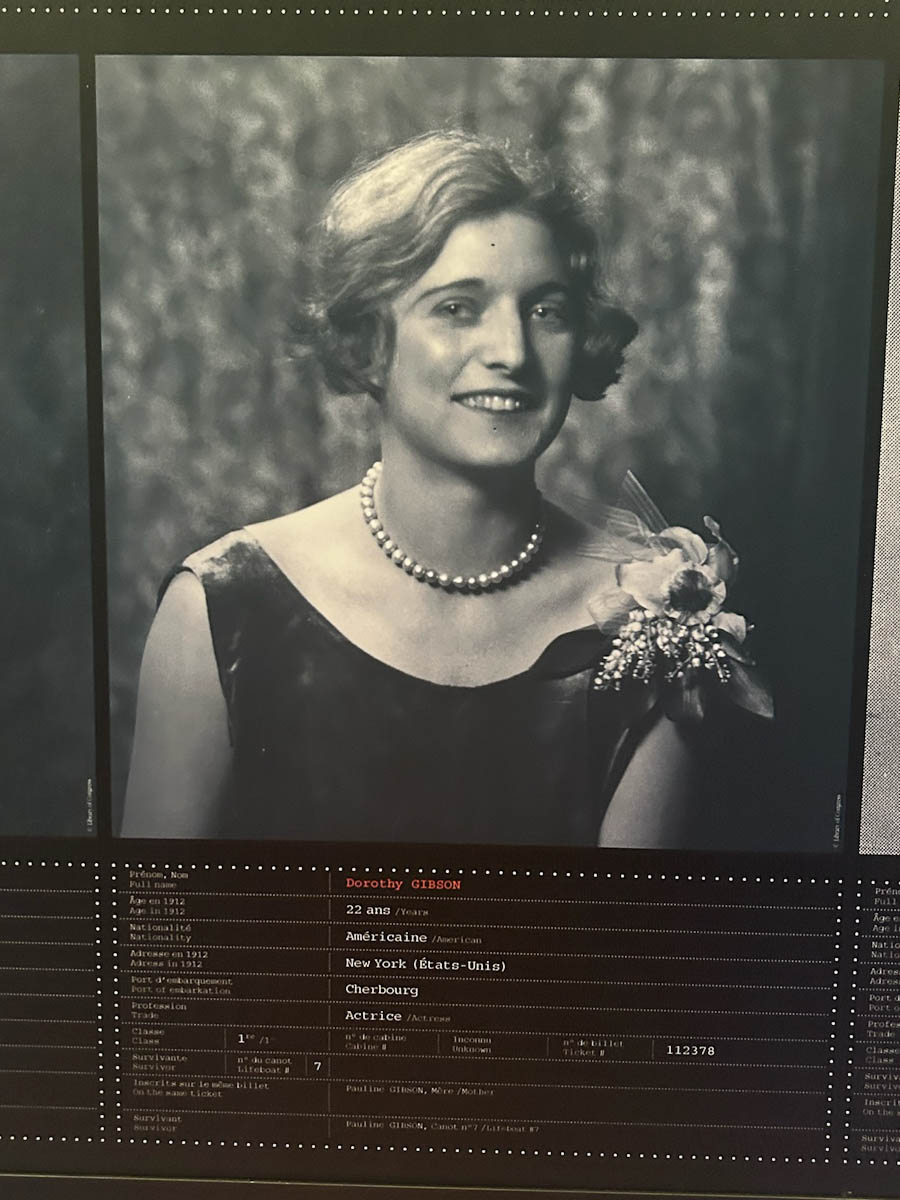
Dorothy Gibson was born on May 17, 1889, in Hoboken, New Jersey. She began her career in entertainment as a chorus girl before becoming a popular model. By the early 1910s, Gibson had established herself as one of the top fashion models for various advertisers, and she gained attention in the rapidly growing film industry.
In early April 1912, Dorothy Gibson and her mother had been vacationing in Europe. The two decided to return to the United States aboard the RMS Titanic, the maiden voyage of its time’s largest and most luxurious ocean liner. They travelled first class, and Dorothy was 22 years old at the time of the journey.
On the night of April 14, 1912, when the Titanic struck the iceberg, Dorothy and her mother were quickly awakened. They made their way to the boat deck, where Dorothy was placed in Lifeboat 7, the first lifeboat launched from the ship. Lifeboat 7 had only around 28 people, well below its total capacity of 65. It was among the first to leave the sinking vessel, and passengers didn’t immediately grasp the severity of the situation.
Helen Churchill Candee

Helen Churchill Candee was an American author, journalist, feminist, and interior decorator who gained notoriety not only for her literary and professional achievements but also as a survivor of the Titanic disaster. In 1912, Helen Candee was in Europe when she decided to return to the U.S. to be with her injured son. She booked a first-class ticket on the RMS Titanic.
On the night of April 14, when the ship struck the iceberg, Helen was in her stateroom reading. Realizing the gravity of the situation, she gathered a few personal items, including a small ivory portrait of her mother, which she entrusted to a male passenger for safekeeping.
Helen was placed in Lifeboat 6, one of the last to leave, under Quartermaster Robert Hichens. Along with the “Unsinkable” Molly Brown, she helped row the lifeboat to safety but suffered a fractured ankle during the evacuation.
Hudson Joshua Crieghton Allison

Hudson Joshua Creighton Allison was a wealthy Canadian businessman who boarded the Titanic with his family during its maiden voyage in 1912. Born on December 9, 1881, in Chesterville, Ontario, Allison became a successful entrepreneur, accumulating significant wealth.
He married Bessie Waldo Daniels in 1907, and they had two children, Loraine and Trevor. The family, living in Montreal, booked first-class passage on the Titanic to return from a European vacation.
On the night of April 14, 1912, when the ship struck the iceberg, confusion ensued. Nurse Alice Cleaver took baby Trevor into a lifeboat without informing the Allisons. Hudson and Bessie, refusing to leave without their son, perished along with Loraine. Hudson’s body was later recovered, while Bessie and Loraine’s were never found.
Trevor survived, cared for by Cleaver, and was later reunited with relatives. The Allison family’s tragic story stands out, as they were the only first-class family to lose both parents and a child in the disaster.
William Thomas Stead

William Thomas Stead was a renowned British journalist, editor, and social reformer, recognized for his pioneering role in investigative journalism. He gained fame for his bold reporting and commitment to social justice, but is also remembered as a notable passenger who perished aboard the Titanic.
In 1912, Stead was en route to a peace conference in the U.S. and booked first-class passage on the Titanic. When the ship struck the iceberg on April 14, 1912, Stead reportedly remained calm, helping women and children into lifeboats. Some accounts suggest he retired to the first-class smoking room, quietly reading as the ship sank.
Stead did not survive the disaster, and his body was never recovered. His death at age 62 ended a remarkable career dedicated to journalism, social reform, and advocacy for peace. Today, he is remembered for his groundbreaking contributions to investigative reporting and his tireless efforts to promote justice and international peace.
First-Class Survival Rates and Comparison with Other Classes

Approximately 201 out of the estimated 324 first-class passengers survived the sinking, resulting in a survival rate of about 61%. This was significantly higher than the survival rates for second and third-class passengers. The higher survival rate for first-class passengers can be attributed to several factors, including their proximity to the lifeboats and the prioritisation of women and children.
The difference in survival rates between first-class and other passengers is stark. While first-class passengers had a 61% survival rate, only about 42% of second-class and 25% of third-class passengers survived. This difference highlights the social inequalities of the time, as first-class passengers had better access to lifeboats and assistance from the crew.
Lifeboat Allocation and Disparities

First-class passengers had the advantage of being closer to the lifeboats, which were primarily located on the upper decks. This proximity played a crucial role in their higher survival rates. The design of the Titanic placed the first-class cabins near the boat deck, making it easier for these passengers to access the lifeboats quickly.
The crew’s efforts to assist first-class passengers also contributed to their higher survival rates. Women and children were prioritised, and many first-class passengers were able to secure spots on lifeboats. The crew’s training and adherence to the “women and children first” protocol helped ensure that many first-class women and children survived the disaster.
This led to the survival rate for first-class passengers on the Titanic being at approximately 61%, with 201 out of the estimated 324 first-class passengers surviving the disaster.
