
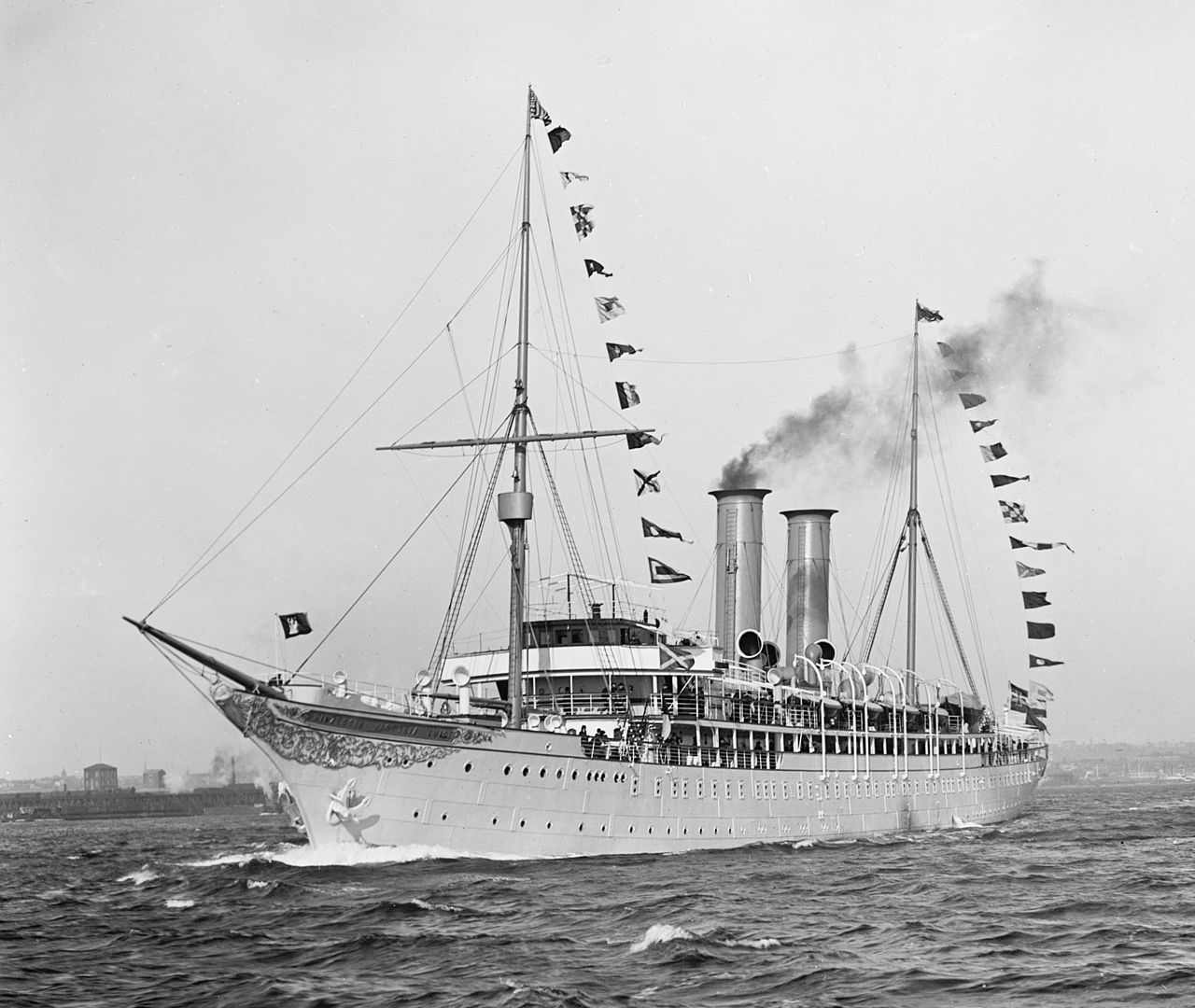
Before megaships with waterslides, robotic bartenders and floating neighbourhoods, there was a single elegant white vessel that changed the course of maritime history. In 1900, Prinzessin Victoria Luise set sail as the world’s first purpose-built cruise ship, a revolutionary idea at a time when ocean liners were designed purely for speed and transportation.
How Prinzessin Victoria Luise Changed Sea Travel Forever
AD We have been or could be if you click on a link in this post compensated via a cash payment, gift or something else of value for writing this post. See our full disclosure policy and privacy policy for more details.
This pioneering German ship wasn’t built to race across the Atlantic or carry migrants in cramped conditions; she was created to make the journey itself the destination, offering leisure, elegance and adventure to wealthy travellers. For six glittering years, she introduced the world to the concept of pleasure cruising, before meeting a sudden and dramatic end on a reef off the coast of Jamaica.
A New Idea for the Turn of the Century
By the end of the 19th century, ocean liners were already crossing the Atlantic regularly, connecting Europe and America. But these ships were built primarily for speed and capacity, not leisure. Wealthy passengers could travel in luxury in first class, but their journeys were still about getting from one place to another.
Albert Ballin, the visionary director of the German shipping company HAPAG (Hamburg-Amerikanische Packetfahrt-Actien-Gesellschaft), saw an opportunity to offer something entirely new: voyages designed for pleasure rather than transport. Instead of racing across the ocean, ships would visit scenic destinations, giving guests time to relax and enjoy the journey itself. This was a radical concept for the era.
Launching the First Purpose-Built Cruise Ship
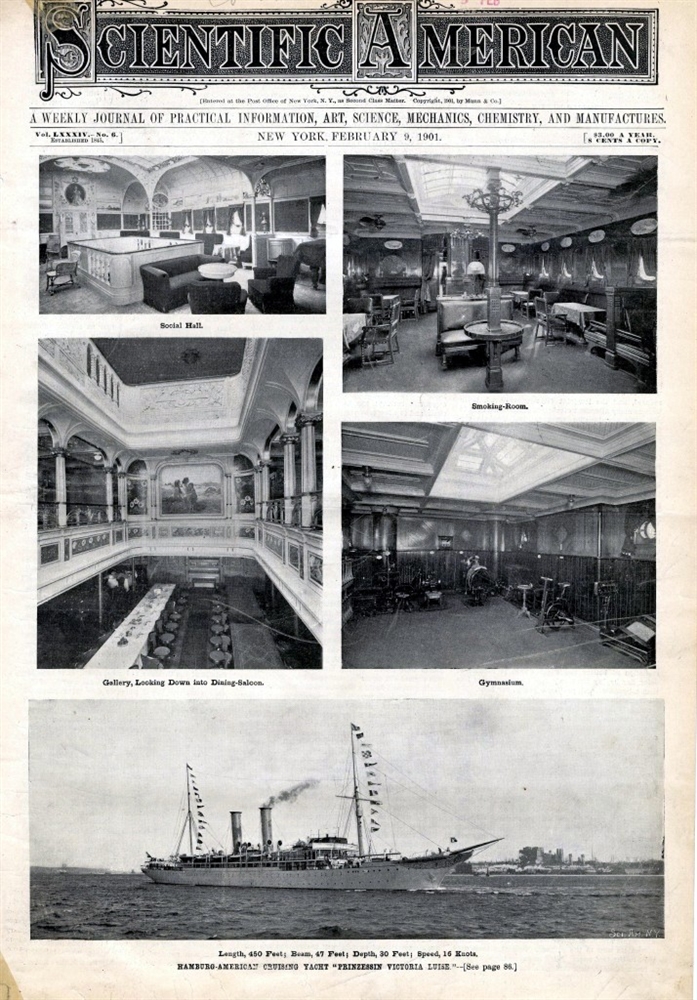
To bring this idea to life, Ballin commissioned a vessel unlike any other. Built at Blohm & Voss shipyards in Hamburg, Prinzessin Victoria Luise was launched on 29 June 1900 and named after the German Kaiser’s daughter. She was relatively small compared to transatlantic liners, carrying around 180 passengers, and was styled more like a private yacht than a commercial ship.
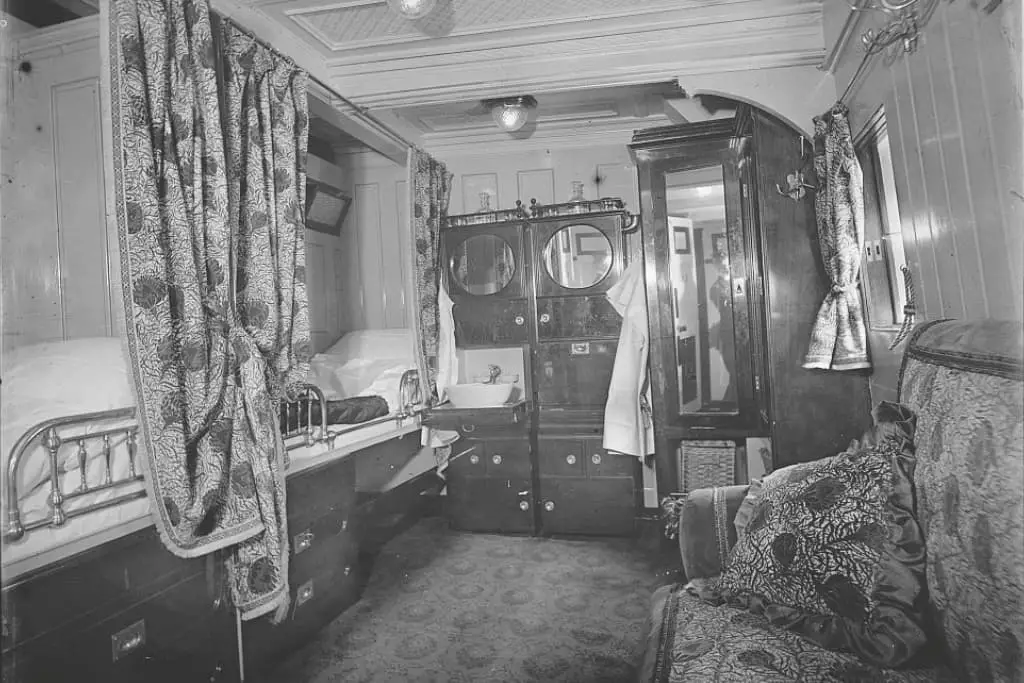
Her design emphasised elegance over speed. She featured beautifully appointed lounges, a grand dining room, a library, and luxurious staterooms with a level of comfort unmatched at sea at the time. Painted white to distinguish her from the dark-hulled liners, she exuded exclusivity and sophistication. Everything about her was crafted to make the journey itself a highlight, not just the destinations.
Life On Board
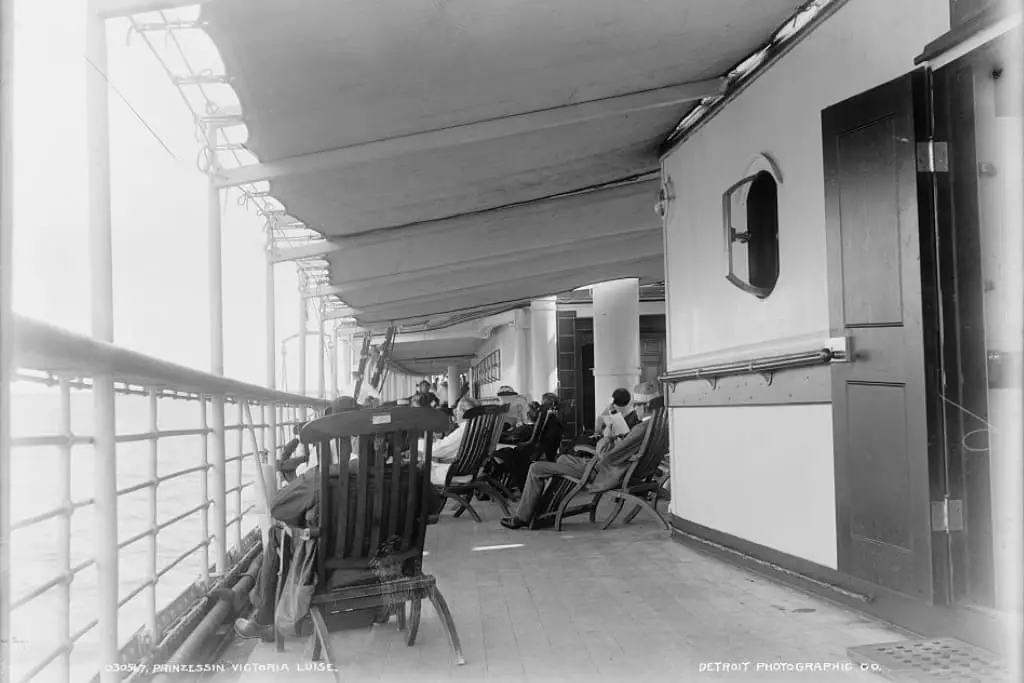
Passengers aboard Prinzessin Victoria Luise enjoyed a cruising experience that would later become the blueprint for the modern industry. Her itineraries took guests on leisurely voyages to the Mediterranean and the West Indies, with carefully planned shore excursions at each port. On board, there were concerts, social events and refined dining, a world away from the utilitarian atmosphere of typical liners.
This focus on comfort and culture appealed to wealthy European and American travellers, who were eager for new ways to explore the world in style. In many ways, these early cruises mirrored the luxury tours of the Victorian Grand Tour, but with the convenience of unpacking only once.
A Tragic Ending
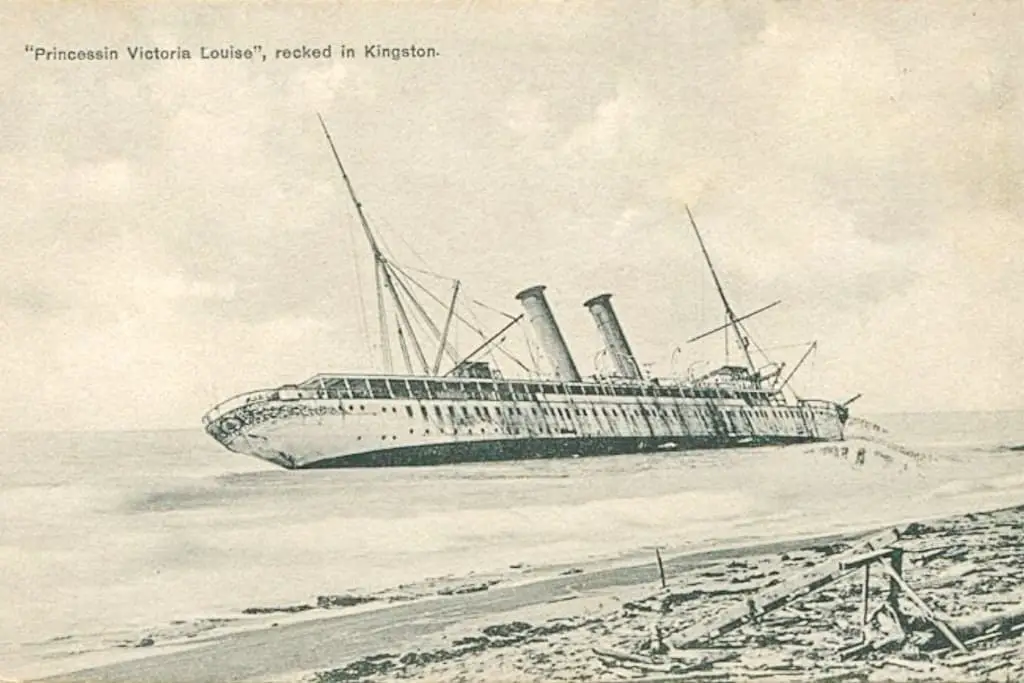
Despite her groundbreaking design and success, Prinzessin Victoria Luise’s story ended abruptly. In December 1906, while on a West Indies cruise, the ship ran aground off the coast of Jamaica near Port Royal. The captain, attempting to navigate into the harbour at night, mistook a lighthouse and struck a reef. Although passengers were safely evacuated, the captain took his own life shortly afterwards, and the ship was declared a total loss.
Her career lasted only six years, but her impact was lasting. She demonstrated that purpose-built cruise ships were not only viable but desirable, inspiring other companies to follow HAPAG’s lead.
A Lasting Legacy
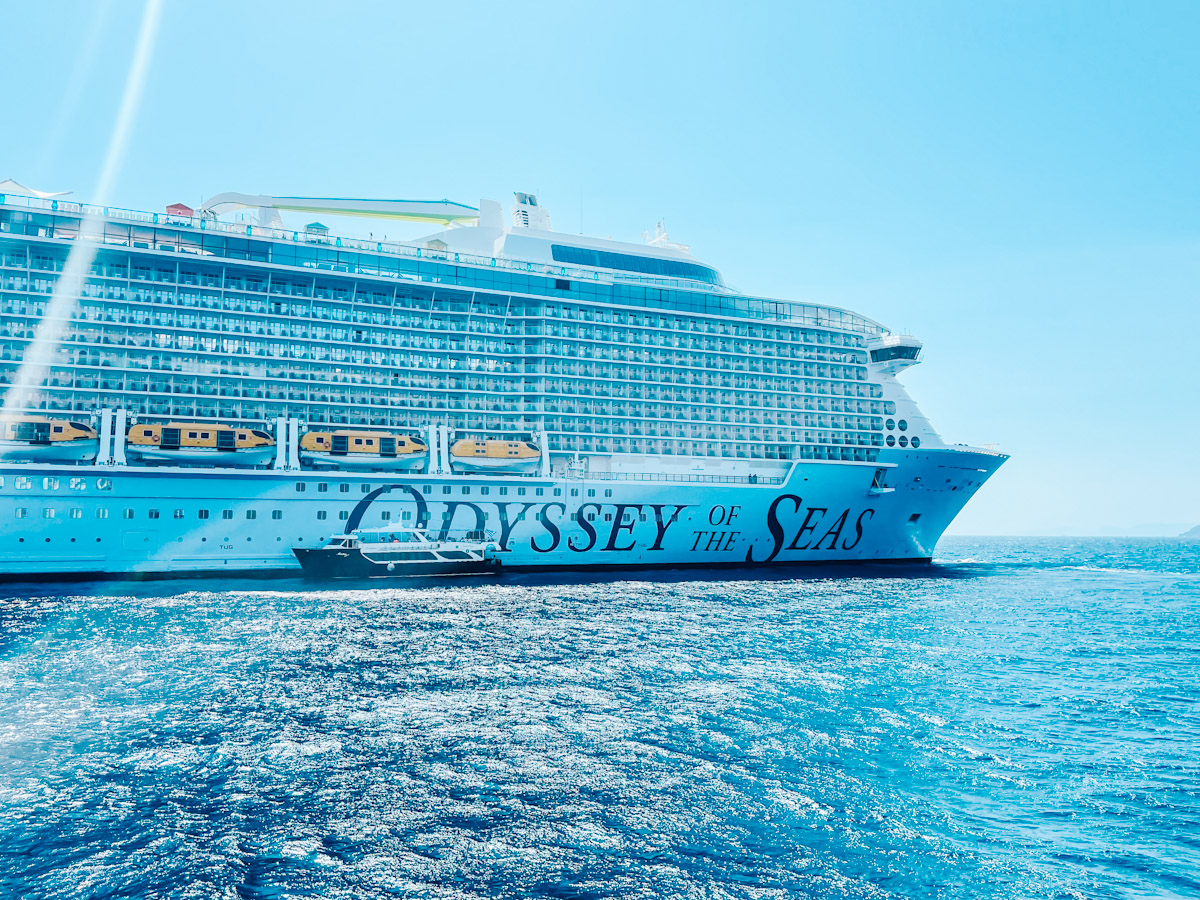
Prinzessin Victoria Luise may have had a short service life, but her legacy can be seen in every modern cruise ship. She introduced the idea of travel for pleasure rather than necessity, and her design influenced the development of luxury cruising in the decades that followed. Her elegant silhouette and focus on passenger comfort paved the way for a new kind of sea travel, one that prioritised experience, culture and leisure.
Today, when we step aboard ships with restaurants, theatres, spas and entertainment at every turn, it’s easy to forget that it all began with a modest white yacht in Hamburg more than a century ago. Prinzessin Victoria Luise didn’t just sail the seas; she changed them forever.
